Quick Summary: What This Blog Covers
This blog explains why measuring SEO success requires a twelve month KPI framework, highlighting the importance of long term visibility, engagement, authority, and conversion metrics. It outlines how to structure a year long plan, avoid common mistakes, and use data from tools like Google Analytics, Semrush, and Ahrefs to drive sustainable growth. The guide emphasizes connecting KPIs to business goals and adjusting strategies over time for maximum impact.
Introduction
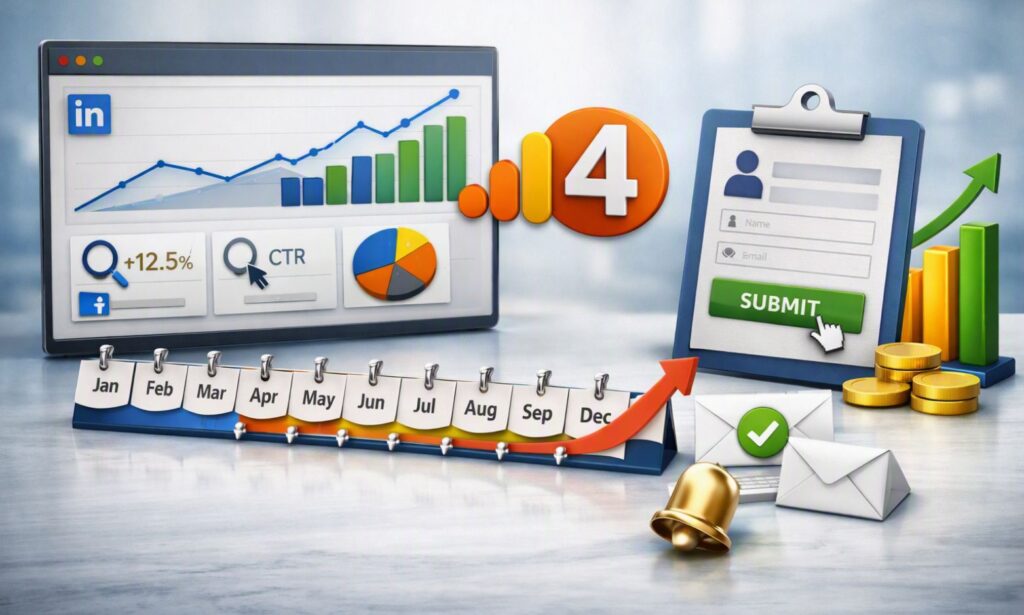
Measuring SEO success is often more complex than it seems. Many organizations track rankings and traffic, but without a clear, long term framework, these numbers can be misleading. A twelve month horizon provides the perspective needed to evaluate performance accurately, understand trends, and make strategic decisions. Focusing on meaningful metrics ensures that SEO efforts align with business goals rather than chasing vanity numbers.
When businesses approach SEO with a full year in mind, the results are not only more sustainable but also easier to interpret. Over twelve months, content matures, backlinks accumulate, user behavior patterns stabilize, and search engines fully index websites. Each of these factors contributes to long term growth that short term bursts of activity cannot deliver.
Why a Twelve Month KPI Framework Matters
SEO is not a sprint; it is a long distance endeavor. Research from Ahrefs shows that most pages take three to six months to gain traction and reach their peak ranking positions. Seasonal trends, algorithm updates, and content quality all affect performance over time.
Short term metrics can create a false sense of progress. For example, a spike in impressions or clicks might look positive, but without sustained growth and engagement, it rarely translates into conversions or revenue. Long term KPIs provide a framework for evaluating the true health of an SEO strategy and ensure resources are invested wisely.
Establishing the Foundation for Year Long KPIs
Before defining KPIs, it is important to understand the business, audience, and competitive landscape. A structured approach makes the difference between KPIs that guide decisions and KPIs that simply collect data.
Understanding Business Goals
SEO KPIs should directly support overarching business objectives. Whether the focus is on lead generation, product sales, or brand awareness, goals must be mapped to measurable outcomes. Platforms like Google Analytics provide insight into traffic sources and user behavior, helping align SEO activity with business objectives. Semrush can also reveal historical trends and keyword opportunities that match seasonal peaks.
Analyzing Audience Demand
Search behavior is not static. Audience interests shift due to trends, seasonality, and cultural events. Tools like Google Trends and AnswerThePublic help identify what users are searching for throughout the year. Understanding these patterns allows KPIs to reflect not just visibility but relevance and impact.
Evaluating Competitor Activity
Competitor insights reveal what works in the market. Platforms such as Moz and Ahrefs provide data on keyword performance, backlink profiles, and content gaps. Tracking competitor activity over time ensures KPIs consider both opportunity and challenge in the market.
Assessing Technical Readiness
A website’s technical health directly influences SEO performance. Core web vitals, crawlability, and site speed all impact rankings. PageSpeed Insights and Google Search Console provide actionable data to optimize site structure before long term KPIs are set.
Core KPIs for a Twelve Month SEO Plan
Year long KPIs should cover visibility, engagement, authority, and conversions. Each category provides insight into a different aspect of performance and together they present a comprehensive view.
Visibility Metrics
Organic impressions track how often pages are shown in search results. Consistent increases indicate growing recognition by search engines. According to BrightEdge, organic search drives more than fifty percent of website traffic across industries, making visibility KPIs essential.
Keyword distribution measures the number of keywords ranking in top positions. Monitoring the spread across top three, top ten, and top twenty results offers insight into overall SEO health.
New keyword acquisition highlights emerging opportunities. Tools like Semrush or Moz reveal which new keywords are gaining traction, guiding content development.
Engagement Metrics
Click through rate (CTR) indicates how well search results attract users. Improving meta titles and descriptions can increase CTR by up to twenty percent, according to data from Backlinko.
Average time on page reflects content relevance. Longer engagement suggests users find the material valuable, informing content refinement decisions.
Pages per session measure the effectiveness of internal linking and user navigation. More pages visited per session often correlate with higher conversions.
Authority Metrics
Referring domains demonstrate external trust. A diverse backlink profile contributes significantly to ranking performance. Research from Ahrefs confirms that pages with multiple authoritative referring domains rank higher in competitive searches.
Brand search volume shows how well a business is recognized. Increasing direct brand searches reflects trust and awareness growth.
Backlink velocity ensures link growth appears natural over time. Gradual accumulation supports sustainable authority without triggering search engine penalties.
Conversion Metrics
Organic leads or sales measure tangible outcomes. Platforms like HubSpot or Google Analytics provide data on the effectiveness of SEO in driving business objectives.
Assisted conversions capture the broader impact of organic traffic across user journeys. SEO often supports later conversions, even if initial visits do not result in immediate action.
Landing page conversion rates indicate how well specific pages convert traffic. This guides content optimization and resource allocation.
Structuring a Twelve Month SEO Plan
KPIs are only valuable when connected to actionable steps. A structured plan ensures that metrics drive the right behaviors and inform decisions at every stage.
Months 1 to 3: Foundation
- Conduct technical audits using Google Search Console and PageSpeed Insights
- Map keywords to business objectives using Semrush
- Refresh existing content for accuracy and relevance
Months 4 to 6: Momentum
- Expand content clusters around high performing keywords
- Implement internal linking strategies to improve engagement
- Begin outreach campaigns for backlink acquisition using HARO
Months 7 to 9: Growth
- Optimize underperforming pages based on engagement and CTR metrics
- Introduce new content targeting seasonal trends identified with Google Trends
- Monitor authority metrics and backlink growth
Months 10 to 12: Optimization
- Refine top performing pages for conversion improvements
- Conduct year end analysis of KPI progress
- Prepare content strategy for the following year based on insights
Avoiding Common KPI Mistakes
- Setting vague metrics such as “increase traffic” without context
- Chasing short term spikes rather than sustained growth
- Ignoring content quality in favor of technical metrics
- Overlooking engagement and conversion in favor of visibility alone
- Failing to review regularly; quarterly reviews ensure KPIs remain relevant
Communicating KPI Progress
Stakeholders respond best to clear, actionable reports. Tools like Looker Studio allow monthly dashboards that display trends without overwhelming viewers with raw numbers. Emphasizing insights, explaining changes, and connecting metrics to decisions ensures the KPI program drives understanding and confidence.
Final Thoughts
A twelve month SEO KPI framework is not simply a reporting tool it is a strategic roadmap. It aligns visibility, engagement, authority, and conversions with business objectives. By monitoring metrics over a full year, organizations gain perspective, avoid misinterpretation, and create sustainable growth. Consistency, measurement, and adjustment are the keys to achieving meaningful results.
For businesses looking to implement a twelve month KPI framework that drives sustainable growth, guidance and consultation are available through alijaffarzia.com. A structured approach ensures SEO efforts translate into long term performance and business impact.
Frequently Asked Questions
What are the most critical KPIs for long term SEO?
Visibility, engagement, authority, and conversion metrics together provide a comprehensive view of performance.
How often should SEO KPIs be reviewed?
Monthly monitoring with quarterly in depth analysis is recommended to balance responsiveness with long term perspective.
Do seasonal businesses need different KPIs?
Yes. KPI frameworks should reflect seasonal patterns, demand spikes, and critical business periods.
Which tools are most useful for tracking KPIs?
Google Analytics, Semrush, Moz, Ahrefs, and HubSpot provide reliable long term tracking for multiple metrics.
Why focus on a twelve month horizon instead of shorter timeframes?
A full year captures indexing cycles, content maturity, authority growth, and seasonal variations, providing a complete view of SEO effectiveness.
Also Read:
-
Localized Affiliate Content for Boston Historical Tours
-
Local Brand Storytelling via Video Interviews with Charlotte Small Business Owners
-
The Role of Content Freshness in Long Term Ranking
-
Local SEO Strategies: How to Dominate Google Maps & Local Pack
-
Tracking Call Conversions with Google Ads: Step-by-Step